
CV4: Stillness, Fluids, and the Quiet Reorganization of the Nervous System
Among all osteopathic techniques, Compression of the Fourth Ventricle (CV4) occupies a unique place.
It is not dramatic. It is not forceful. And yet, when performed well, it is often profoundly effective.
CV4 does not aim to correct a joint or lengthen a muscle. It works at a deeper level—one that osteopathy has always recognized but modern medicine has struggled to articulate: the regulation of the nervous system through fluid motion and stillness.
Historical Roots: From Still to Sutherland
Andrew Taylor Still insisted that health depended on the quality of the internal environment. He famously wrote:
“All nerves drink from the waters of the brain.”
— A.T. Still
This statement was not metaphorical. Still believed that circulation of fluids—blood, lymph, and what we now call cerebrospinal fluid—determined the functional capacity of the nervous system.
William Garner Sutherland (1873–1954) extended this insight through decades of investigation into cranial motion and what he termed the Primary Respiratory Mechanism (PRM). Sutherland observed that cerebrospinal fluid exhibited a rhythmic fluctuation distinct from cardiac or pulmonary rhythms, and that changes in this fluctuation were associated with health or dysfunction.
CV4 arose from these observations—not as a trick, but as a direct engagement with the physiology of fluid exchange at the level of the brainstem.
What Is CV4?
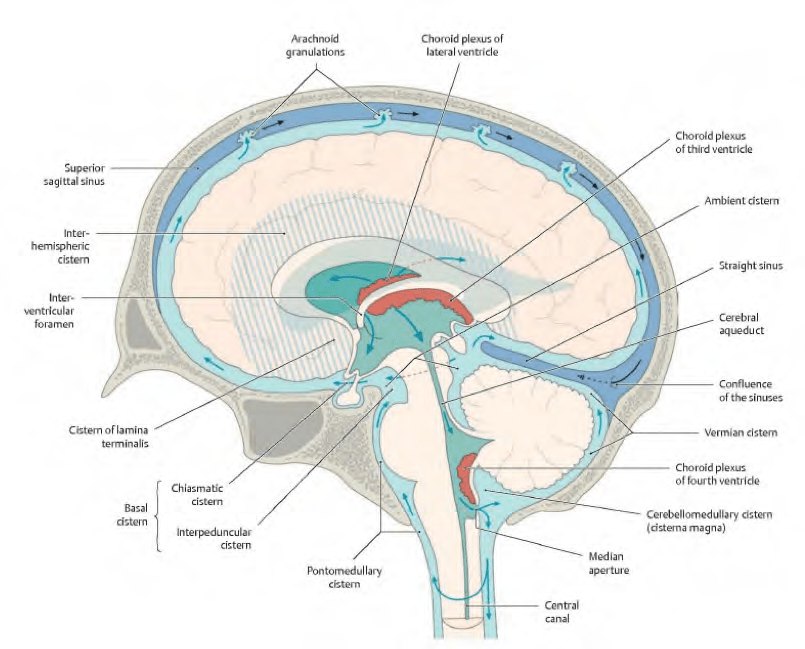
CV4 refers to gentle medial compression of the lateral angles of the occiput, designed to influence the shape of the posterior cranial fossa and, temporarily, the size of the fourth ventricle, which lies between the cerebellum and brainstem.
Anatomically and physiologically, this matters greatly.
The fourth ventricle and surrounding brainstem structures are intimately involved in:
- Respiratory regulation
- Cardiovascular control
- Autonomic balance
- Endocrine signaling (via hypothalamic–pituitary connections)
- Immune modulation
The PMC review you provided summarizes these effects clearly, noting that CV4 has demonstrable influence on autonomic nervous system balance, heart rate variability, pain perception, and emotional regulation.
Potency and Stillness
During CV4, the rhythmic fluctuation of cerebrospinal fluid often slows and enters what osteopaths call a still point. Sutherland described this state vividly:
“You have brought the body of cerebrospinal fluid to a condition where… it is simply quivering or vibrating. In the still point that arises… the motor is idling.”
— Teachings in the Science of Osteopathy, p.176
This “idling” is not shutdown. It represents a moment where sympathetic drive decreases and parasympathetic regulation becomes dominant—a state modern neuroscience increasingly recognizes as essential for healing.
Rollin Becker, DO articulated the implications of CV4 more explicitly:
“The rhythmic fluctuation of the cerebrospinal fluid… creates rhythmic balanced interchange with the choroid plexuses, the physiologic centers in the floor of the fourth ventricle, the neurons of the central and peripheral nervous system, the pituitary–hypothalamic axis… and all cellular and fluid systems of the body.”
— Life in Motion, p.88
CV4 and the Modern View of Chronic Pain
Chronic pain is increasingly understood not as a persistent injury, but as a state of altered nervous‑system processing. The PMC article in the below bibliography highlights CV4’s effects on:
- Autonomic tone
- Pain thresholds
- Neuroendocrine balance
- Stress responsiveness
In clinical terms, CV4 often helps when pain is diffuse, persistent, or resistant to mechanical treatment alone—precisely the kind of pain seen in trauma‑associated conditions and long‑standing pain syndromes.
Rather than “fixing” a lesion, CV4 changes the internal milieu in which pain processing occurs.
Trauma, Stillness, and Consciousness
In trauma physiology—as described by Peter Levine and others—healing requires access to states of safety and completion, not effort or force.
CV4 reliably evokes:
- Slower respiration
- Reduced muscle tone
- Decreased heart rate
- Enhanced interoceptive awareness
Patients often report experiences of warmth, emotional release, or deep quiet—not because trauma is being “worked on,” but because the nervous system has briefly exited survival mode.
CV4 does not process trauma cognitively. It creates the conditions under which processing becomes possible.
This is where it aligns naturally with consciousness‑based therapies and psychedelic integration work: both rely on state change, not mechanical correction.
Addiction and Autonomic Reset
Many addictive behaviors temporarily create the same physiologic effects that CV4 encourages more safely:
- Reduced sympathetic overdrive
- Altered perception of distress
- Increased parasympathetic tone
CV4 offers a non‑chemical way to experience similar autonomic shifts. In this context, it can support recovery by helping patients recognize that regulation is possible without external substances.
Indications and Clinical Use
CV4 has traditionally been used for:
- Chronic pain syndromes
- Anxiety, depression, and insomnia
- Headache and migraine
- Autonomic imbalance
- Fatigue and burnout
- Inflammatory and immune conditions
Contra‑indications include acute intracranial hemorrhage, skull fracture, and severe occipito‑mastoid compression, as noted in classical teaching and modern reviews.
Closing Reflection
CV4 reminds us of something essential.
Healing does not always require intervention. Sometimes it requires permission for the system to pause.
“We suffer from a want of supply and the burden of dead deposits.”
— A.T. Still
CV4 addresses both—not by movement, but by stillness.
In chronic pain. In trauma. In addiction.
Sometimes the most powerful medicine is allowing the waters to settle—
until the body remembers how to move again.
Primary & Historical Sources
- Compression of the Fourth Ventricle – Review Article, Journal of Osteopathic Medicine
- Still, A.T. Autobiography of Andrew Taylor Still
- Sutherland, W.G. Teachings in the Science of Osteopathy
- Becker, R.E. Life in Motion
- Sutherland, A.S. With Thinking Fingers
 Conscious Osteopathy