
Healing and the Natural World: Reviewing an interview with James Jealous, DO
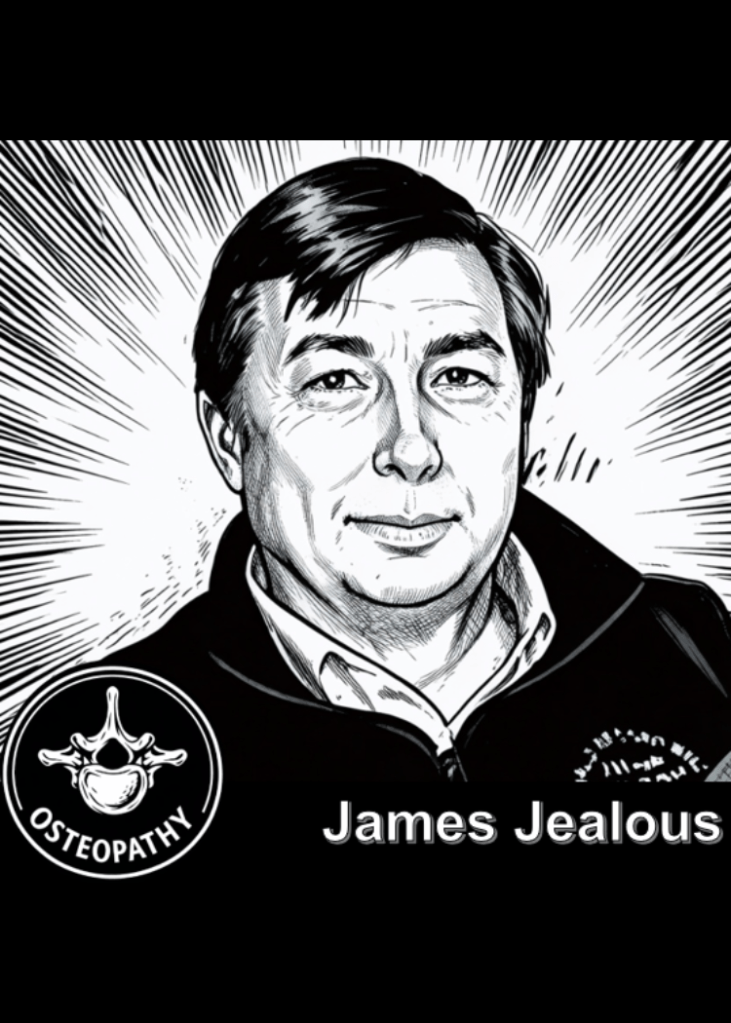
In 1997, Alternative Therapies published an extended interview with James Jealous, DO, titled “Healing and the Natural World.” Nearly three decades later, the piece remains one of the clearest articulations of an osteopathic worldview that directly addresses the limits of symptom‑based medicine—and offers a framework that resonates deeply with modern understandings of chronic pain, trauma, addiction, and nervous‑system regulation.
What follows is not a summary alone, but a contextual review: what Jealous is saying, why it matters now, and how it underpins the work explored throughout this blog.
Source acknowledged:
Horrigan, B. (1997). Healing and the Natural World. Alternative Therapies, Vol. 3, No. 1.
Osteopathy as a Philosophy Before a Technique
Early in the interview, Jealous makes a distinction that is foundational to understanding osteopathy as he practices it:
“Osteopathy in its conception contained a philosophy as well as a science.”
— James Jealous, DO
This is not nostalgia. It is a critique of how modern medicine—and much of “alternative” medicine—has drifted into biomolecular reductionism, merely replacing pharmaceuticals with supplements, protocols, or modalities.
Jealous argues that osteopathy was never meant to be a list of techniques. It was a way of perceiving the human being as an indivisible whole—body, mind, and spirit—and responding to that wholeness directly through skilled attention and hands‑on engagement.
This stance directly supports the thesis of this site: that durable healing for complex conditions requires a shift in how we see the person, not just what we do to their tissues or chemistry.
Chronic Pain: When Treatment Misses the Whole
Jealous repeatedly returns to the idea that modern healthcare increases suffering when it separates symptoms from meaning:
“If they become ill, their inner balance and ‘peace of mind’ are not juxtaposed to the causal event, and as a result, suffering is increased.”
This insight maps precisely onto contemporary pain science. Chronic pain is rarely explained by tissue damage alone. It reflects altered processing, persistent threat signaling, and loss of internal balance.
Jealous describes how osteopathic treatment—applied patiently and without fixation on “the disease”—can reduce pain medication use and restore function:
“Without the treatment he needed lots of pain pills and with the treatment he did not need any.”
Notably, no new drug was added. No diagnosis was eliminated. The state of the system changed.
This is a core theme throughout osteopathic manipulation medicine and modern trauma‑informed care alike: when regulation is restored, pain often recedes.
Trauma, State, and the Nervous System
Jealous does not use modern trauma terminology, but his descriptions align closely with what later thinkers like Peter Levine would articulate in Waking the Tiger.
He describes sensing fear as a physiologic hum, and beneath it, something more stable:
“Underneath it was a sweet, shapeless sense of certainty and health.”
This language mirrors contemporary understandings of trauma as layered nervous‑system states—fight/flight overlaying a more fundamental capacity for regulation.
Importantly, Jealous does not push patients to “process” trauma. He waits. He listens. He treats in a way that allows autonomic balance to return naturally:
“The partition between the fear and the sweetness let go.”
This is not suggestion or placebo. It is state change facilitated by safety, contact, and time—precisely the conditions required for trauma resolution.
Addiction as an Attempt at Regulation
While addiction is not Jealous’ explicit topic, his framework explains it clearly.
He emphasizes that healing is not about willpower, consciousness “levels,” or blame:
“The patient should not be blamed for not getting well… it’s more about tempo and healing-time.”
From this perspective, addictive behaviors reflect efforts to regulate unbearable internal states when gentler mechanisms are unavailable. Osteopathic care—by restoring internal balance—can reduce reliance on external regulation, whether chemical or behavioral.
This parallels current harm‑reduction models and psychedelic‑integration frameworks, which prioritize state safety over symptom suppression.
Consciousness, Perception, and “The Breath of Life”
Perhaps the most profound contribution of the interview is Jealous’ insistence that healing depends on perceptual skill, not technique accumulation:
“We are not listening for symptoms but for a pre‑established priority set in motion by the Health in the patient.”
He describes what he—and earlier osteopaths—called the Breath of Life: a formative force that organizes fluids, tissues, and nervous system function.
Crucially, he states:
“The Health in the patient cannot become diseased or die.”
This assertion reframes healing entirely. It suggests that beneath pain, trauma, addiction—even terminal illness—there remains an undiseasable organizing principle that can be supported.
This view echoes embryology, modern neuroscience, and consciousness‑based healing traditions, without requiring metaphysical belief—only direct perception and humility.
Time, Stillness, and the Failure of Speed
Jealous is openly critical of short, transactional medical encounters:
“I’m not bright enough to practice medicine in 7 minutes.”
His insistence on time is not sentimental. Regulation takes time. Trust takes time. State change cannot be rushed.
This principle connects directly to osteopathic still‑point techniques (such as CV4), somatic therapies, and psychedelic sessions alike: the nervous system requires time and safety to reorganize.
Why This Interview Still Matters
Healing and the Natural World is not merely inspirational. It provides a coherent theoretical foundation for treating conditions that modern medicine struggles with most:
- Chronic pain without clear pathology
- Trauma that outlives memory
- Addiction rooted in dysregulation
- Illness that persists despite “correct” treatment
Jealous does not reject medicine. He rejects fragmentation.
“Healing is not about getting rid of symptoms. It’s about an individual wholeness.”
That sentence alone could serve as the mission statement for this blog.
Closing Reflection
James Jealous offers no formulas. He offers a way of seeing.
His work reminds us that healing is not manufactured—it is allowed. That the body already knows how to restore balance when given safety, attention, and time. And that consciousness is not an abstract add‑on, but an intrinsic part of physiology.
In a culture that rushes, categorizes, and controls, osteopathy—at its best—still knows how to wait.
And sometimes, that is enough.
Primary Source
- Horrigan, B. (1997). Healing and the Natural World: An Interview with James Jealous, DO. Alternative Therapies, Vol. 3, No. 1.

